Patients search the symptom, not the specialty: rebuilding a Harley Street clinic around what people actually type.
Harley Street Audiovestibular Clinic is a CQC-registered, consultant-led private diagnostic clinic at 86 Harley Street, London, working in a specialty most patients have never heard of. Pulse Digital Health rebuilt the website and the content estate around the symptoms people search for instead of the discipline that treats them. In the 5 months since launch the site has earned 1.29M search impressions across 336 pages, its ranking keyword count has grown roughly fivefold, and the Google Business Profile has produced 940 calls, direction requests and website clicks.
01 . Client overview
The client
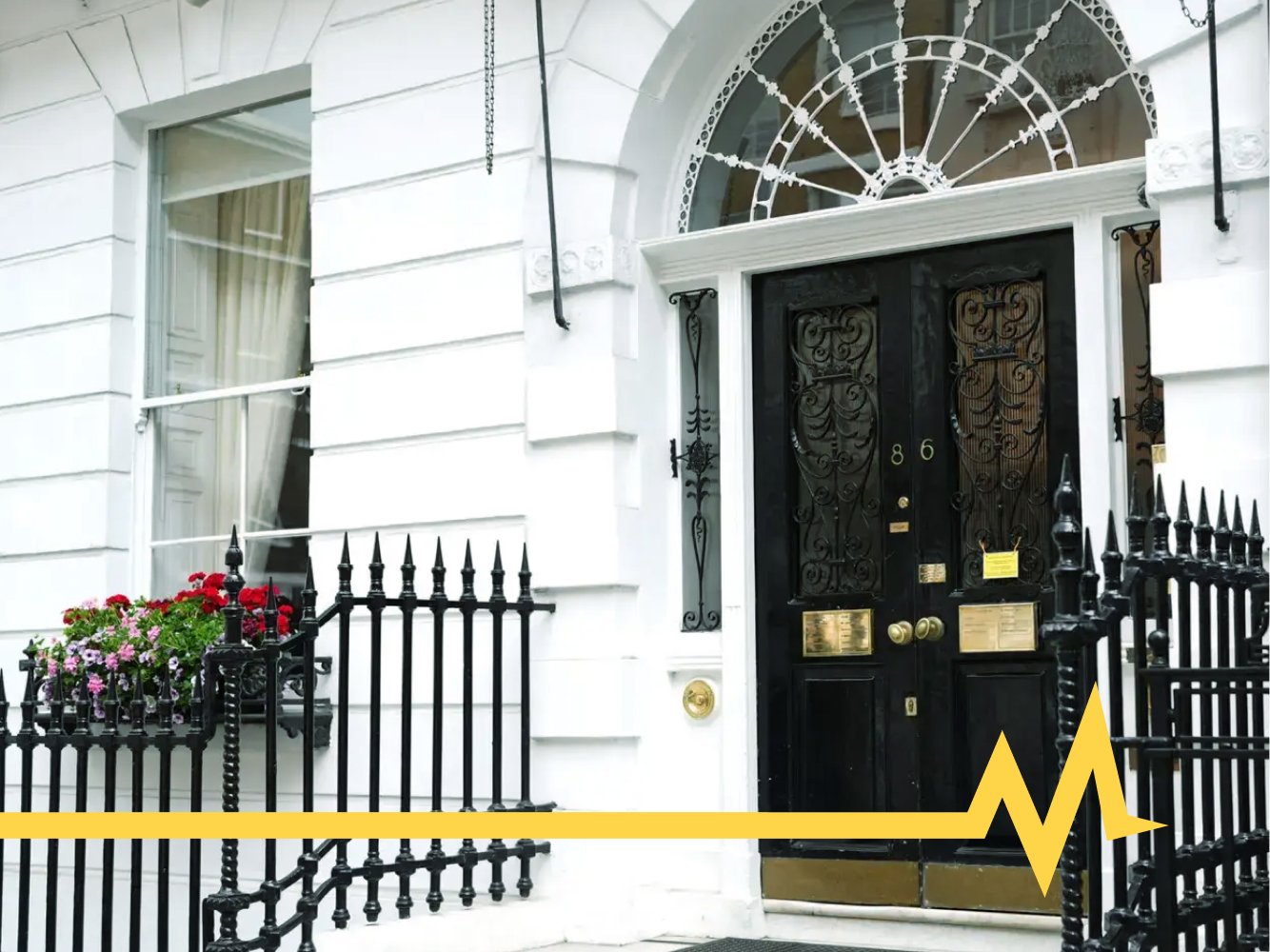
Harley Street Audiovestibular Clinic is a CQC-registered private diagnostic clinic at 86 Harley Street in central London. It is led by consultants in audiovestibular medicine and works across hearing loss, tinnitus, dizziness and disorders of balance.
The clinic is a diagnostic and coordinating centre rather than a treatment provider. Its work is establishing why a patient is dizzy, unsteady, or hearing something nobody else can hear, then coordinating the right onward care. It does not sell hearing aids and it does not operate, so the site had no product to lean on.
Pulse Digital Health rebuilt the site and relaunched it at the start of the period covered here. There is no search history before that point to build on or to protect, which means every figure on this page was earned by the new site.
Sector
Private healthcare. Consultant-led audiovestibular diagnostics in central London, CQC registered, referral and self-pay.
Starting position
An empty Search Console property at launch. No inherited rankings, no accumulated authority on the new estate, and a specialty with almost no search demand under its own name.
Remit
Website rebuild, condition and test content estate, technical SEO, structured data, internal linking and Google Business Profile management.
02 . The challenge
The challenge
None of the usual routes into a healthcare market were open here. There was no category demand to capture, no product to sell, no ranking history to inherit, and a regulatory ceiling on everything the pages were allowed to say.
A specialty patients cannot name
Almost nobody searches for audiovestibular medicine. The Business Profile records 507 searches for the term across 6 months, and that is close to the whole of the category demand. Every other patient arrives searching a symptom instead, so the site had to intercept the symptom.
Conditions with very little reliable information online
Tensor tympani syndrome, middle ear myoclonus, vestibular paroxysmia, typewriter tinnitus. Patients with these symptoms find forum threads and fragments. Covering them properly meant clinical review on every page rather than volume publishing.
No search history to inherit
The rebuild started from an empty Search Console property. Nothing to protect, and nothing to compound from, so the estate had to reach useful scale before any of it could rank.
A diagnostic clinic, not a retailer
The clinic does not sell hearing aids and does not perform surgery, which closes off the commercial content routes most hearing and ENT sites use. Attention had to be earned on diagnostic authority alone.
An audience that raises the accessibility bar
Patients arrive with hearing loss, visual vertigo and symptoms that make screens genuinely difficult to use. Accessible design was a clinical requirement here rather than a compliance box.
Regulated claims on every page
Private healthcare advertising sits under ASA and CAP rules. No outcome claims, no cure language, no superlatives, and consultant sign-off before anything reached the site.
03 . Our strategy
Our strategy
One system, built in a deliberate order. The estate first, so there was something worth ranking. Then the machine readability, the internal structure and the local presence that decide how much of it gets found.
Rebuild around the symptom, not the service
Every condition and every diagnostic test was given its own page, written to answer the question a patient types at two in the morning rather than to describe a service line. Flat, canonical slugs throughout, with the hierarchical paths redirected. The estate now runs to 336 pages earning search impressions, 136 of them ranking in Google's top 10.
Own the conditions almost nobody covers properly
Pulsatile tinnitus, tensor tympani syndrome, PPPD, benign paroxysmal positional vertigo and middle ear myoclonus. Each page rewritten to house standards, medically reviewed by a consultant in audiovestibular medicine, and published with a named author and a named reviewer. Those five pages alone account for 476,644 search impressions.
Make the site legible to machines
MedicalWebPage and FAQPage schema deployed as a graph across the highest-traffic pages, with the organisation, the physician, the condition and the test typed inline rather than left as identifier stubs. FAQ markup only where a visible FAQ block exists on the page. Semrush now records 123 pages of the site cited across AI platforms, 258 citations in total, and a single condition page cited across 12 tracked prompts.
Link the estate together deliberately
Internal linking built from Search Console striking-distance data rather than by feel, prioritising pages already earning impressions on page two. Anchor text taken verbatim from existing body copy, front-loaded, and capped per page so the links read as part of the article instead of a bolt-on.
Run the Business Profile as a channel, not a listing
Categories, services, description and photography maintained against the diagnostic positioning, alongside a monthly review response loop in the clinic's voice. Over 6 months the profile was viewed 14,135 times and produced 940 calls, direction requests and website clicks.
04 . The results
The results
The work was judged on one thing: whether the right patients could find the clinic at the moment they were looking. There was no search history before the rebuilt site went live, so what follows is what the new site earned, and the level it has held since.
Monthly search impressions and clicks
Google Search Console, web search, all countries. The first month shown is partial. The chart stops at the last complete month, so it does not carry the final weeks included in the figures above.
Search visibility
| Measure | Result |
|---|---|
| Clicks from organic search | 7,937 |
| Search impressions | 1,288,528 |
| Clicks from the United Kingdom | 6,197 |
| Search impressions, United Kingdom | 734,274 |
| Average position across the period | 8.2 |
| Share of clicks from mobile | 69% |
AI visibility
| Measure | Result |
|---|---|
| Pages cited by AI platforms | 123 |
| Citations across AI platforms | 258 |
| Cited pages, Google AI Overview | 97 |
| Cited pages, Google AI Mode | 30 |
| Cited pages, Gemini | 5 |
| Cited pages, ChatGPT | 3 |
The estate that earns
| Measure | Result |
|---|---|
| Pages earning search impressions | 336 |
| Pages ranking in Google’s top 10 | 136 |
| Search queries ranking in Google’s top 3 | 166 |
| Ranking keywords, Semrush | 1,900 |
| Referring domains, Semrush | 236 |
| Backlinks, Semrush | 642 |
The Business Profile, last 6 months
| Measure | Result |
|---|---|
| Views of the Business Profile | 14,135 |
| Searches showing the profile | 2,234 |
| Website clicks from the profile | 492 |
| Direction requests | 354 |
| Calls from the profile | 94 |
| Direct actions taken | 940 |