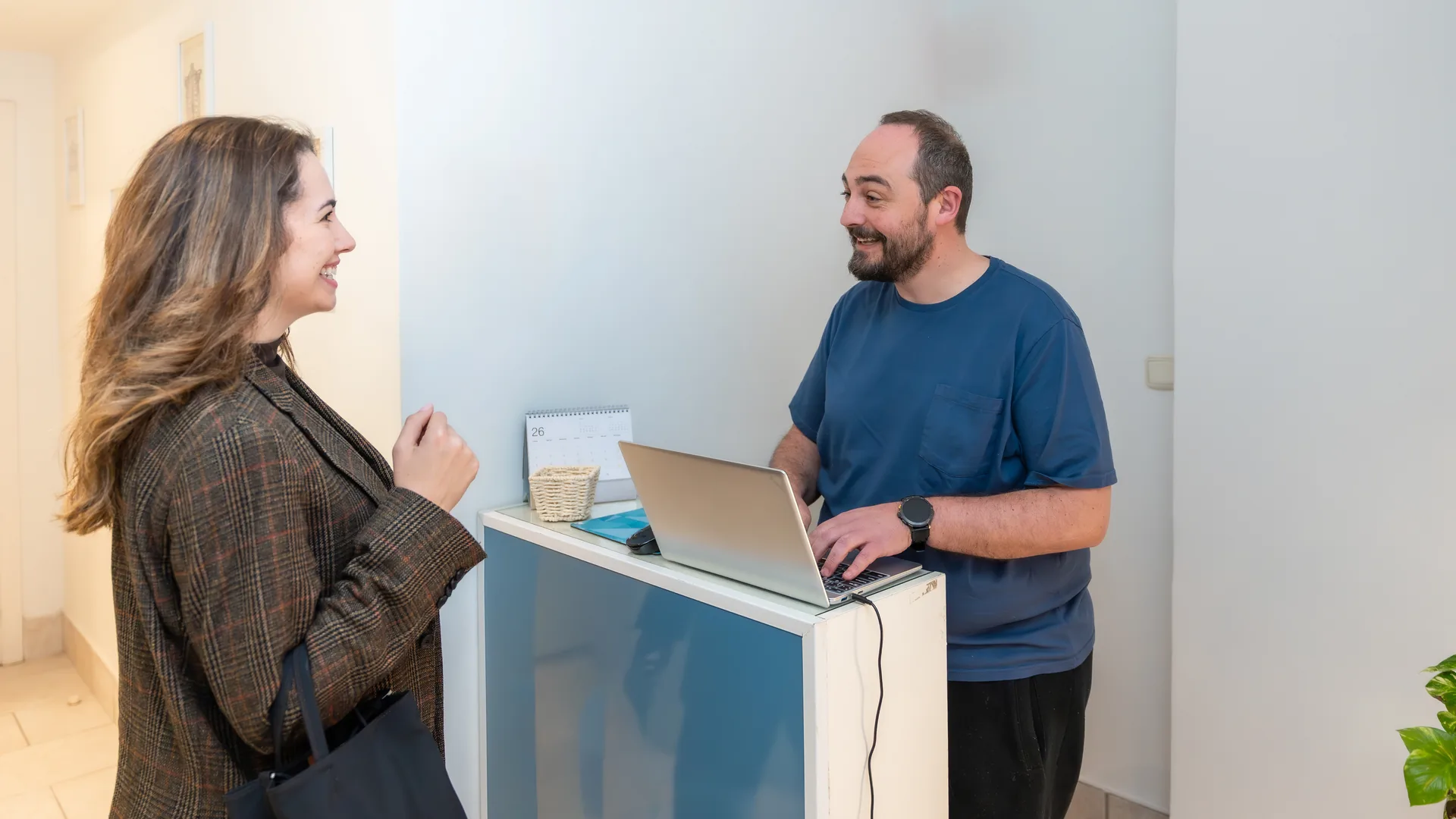
Patient Enquiries: Closing the Gap to Booked Appointments

Overview
Patient enquiries are only the start of the journey; the booking is made or lost in the conversations that follow. At many clinics the website delivers a steady flow of interest, yet the number of confirmed appointments lags far behind, because the team answering calls and messages was never shown how to convert them. This article explains why the gap opens and how simple reception training and clear routines close it.
Key takeaways
- The website wins interest; the front desk wins the booking.
- Answering questions is not the same as converting an enquiry.
- Every conversation should end by offering an appointment.
- Short, regular reception training beats a one-off lecture.
- Track enquiries to outcomes so the team can see their own progress.
A doctor reviewing the numbers noticed a puzzle: the website produced a steady flow of patient enquiries, yet bookings barely moved. Listening in on how enquiries were handled revealed the answer. Messages received polite but passive replies. Callers had their questions answered, were thanked, and were left to decide alone. Nobody was doing anything wrong; nobody had been shown how to do it well.
The gap between interest and appointments is usually a people-and-process gap, and it responds quickly to attention. Here is how to close it.
Where patient enquiries actually stall
Follow a batch of enquiries end to end and a pattern appears. Few are refused; most simply drift. The caller asks about availability, gets an answer, says thank you and rings off. The email enquiry receives information and no invitation. The interest was real, the response was courteous, and the appointment never happened. The stall point is the handover from answering to asking, and most teams never cross it.
Answering is not converting
Admin teams are usually hired for accuracy and kindness, and they deliver both. But an enquiry is a moment of decision, and a purely informational reply leaves the patient to push themselves over the line. Converting means closing the loop: answering the question, then warmly offering the next step. The difference between would you like me to book that for you and anything else I can help with is the difference between a booking and a maybe.
Every enquiry ends with an offer
Install one simple rule: no enquiry conversation ends without offering an appointment. Not pressure, an offer. We have space this week, shall I hold one for you? Patients contact a clinic because they want the problem dealt with; a concrete offer is helpful, not pushy. The rule is easy to remember, easy to check and, on its own, lifts booking rates noticeably within weeks.
Give the team words that feel natural
Scripts fail when they sound like scripts. Instead, agree flexible phrasings the team actually likes saying, for openings, for the booking offer, for handling I need to think about it. Write them down, keep them short and let each person adapt the wording to their own voice. The aim is confidence, not recitation: a team member who knows what to say next never has to retreat into passivity.
Reception training that sticks
A single training afternoon fades within a month. What works is short and regular: fifteen minutes each week, one topic at a time, built around real enquiries from the week before. Listen to a call together, praise what worked, rehearse one improvement. Reception training in this rhythm becomes part of the job rather than an event, and the skills compound instead of evaporating.
Make the phone the priority it is
A ringing phone is a patient volunteering to be booked, and it outranks almost any task beside it. Agree standards the team can actually meet: how quickly calls are picked up, what happens when the desk is busy, who returns missed calls and by when. Protect quiet cover for peak times. None of this is complicated; it is simply deciding that the moment of contact matters most.
Handle hesitation with kindness
Many enquirers hesitate for reasons they do not volunteer: cost worries, nerves about the procedure, uncertainty about whether their problem is serious enough. Train the team to make space for these, gently. Lots of patients ask about that, would it help if I explained how the first appointment works? Hesitation met with understanding often turns into a booking; hesitation met with silence rarely does.
Connect the diary to the enquiry list
If enquiries live in an inbox and bookings live in a diary, nobody can see the gap between them. Keep a simple log: each enquiry, its source, who handled it, what happened. Review it weekly. The log shows which enquiries drift, which days leak and which team members have habits worth copying. Visibility turns conversion from a vague aspiration into a number the whole team owns, and the log itself takes less effort to keep than the enquiries it rescues are worth.
Let the team see their own score
People improve what they can see. Share the weekly figures with the front desk: enquiries in, bookings made, the rate between them. Celebrate movement, and treat dips as puzzles to solve together rather than faults to assign. When the team watches its own conversion climb, the behaviours that drove it reinforce themselves, and the standard rises without management pushing.
Keep the website and desk telling one story
Conversion is a relay: the website sets expectations and the team carries them home. If pages promise rapid appointments the desk cannot honour, trust breaks at the first call. Align what the site says with what the team can deliver, and feed the questions real enquirers ask back into the pages. Our healthcare CRO consultancy works both ends of that relay for exactly this reason.
Training solves the conversations your team has; routing solves the calls that never reach the right person at all, and most clinics discover they need some of both once they look closely at where enquiries actually stall. Our companion article on call handling picks up that second half of the problem and shows how to fix it line by line.
Frequently asked questions
Why do so many patient enquiries never become bookings?
Usually because the conversation ends with information instead of an invitation. The patient asks, the team answers, and nobody proposes the appointment. Add slow replies and no follow-up, and interested patients drift to whichever clinic makes booking feel easiest.
The fix sits in habits and ownership rather than in more marketing.
What should reception training for a clinic cover?
Four essentials: answering promptly and warmly, answering the actual question, offering an appointment in every conversation, and handling hesitation with empathy. Add the practical rules for messages and missed calls.
Deliver it in short weekly sessions using real examples from your own clinic, which keeps it relevant and makes the habits stick.
Is offering an appointment in every conversation too pushy?
No, provided it is phrased as help rather than pressure. Patients contact a clinic because they want their problem addressed, and a warm offer such as shall I book you in while we are speaking saves them effort. Pushiness comes from ignoring reluctance, not from offering.
A kind offer, accepted or declined, always leaves a good impression.
How quickly should the team respond to enquiries?
Aim to answer calls within a few rings and written enquiries within the hour during working time. Speed matters because patients typically contact several clinics and the first helpful response usually frames their decision.
Where an immediate full answer is impossible, a quick personal acknowledgement holds the patient’s attention until the proper reply follows.
How do we measure whether the front desk is converting?
Keep a running log of every enquiry with its source, handler and outcome, then review it weekly against the diary. The share of enquiries that end as booked appointments is the number to watch.
Shared openly with the team, it turns improvement into a visible, collective goal rather than an abstract management concern.
Do we need new staff to improve conversion?
Rarely. The same people, given clear expectations, natural wording and a little regular practice, almost always close most of the gap. Problems that look like personnel issues are usually process issues: nobody owned the enquiry, nobody defined success, nobody showed the team what good sounds like.
Fix those first before concluding anyone is unsuited.